Why Generic Marketing Is Failing in 2026
The Death of Generic Marketing: Why Customers Expect Personalization Now
Not long ago, businesses could send the same message to everyone and still get results.
A single email campaign could go out to thousands of contacts. One advertisement could target an entire audience. A monthly newsletter was often enough to keep customers engaged.
Those days are disappearing quickly.
Customers are exposed to thousands of marketing messages every day. Their inboxes are full, their social feeds move faster than ever, and their attention has become one of the most valuable resources in business. As a result, people have become incredibly good at filtering out anything that feels generic.
Think about your own behavior. When you receive an email that clearly wasn't written with you in mind, you probably delete it. When an advertisement feels irrelevant, you scroll past it without a second thought. Most customers do exactly the same thing.
This is why personalization is becoming one of the most important business trends of 2026.
The businesses getting the best results aren't necessarily creating more marketing. They're creating marketing that feels more relevant.
A local gym, for example, might have three different members receiving three completely different experiences. A new member receives onboarding tips and encouragement. A member who hasn't visited in several weeks receives a special offer to come back. Someone interested in personal training receives educational content about coaching programs. The communication feels timely because it matches where the customer is in their journey.
The same thing is happening across almost every industry.
A real estate team can automatically send different information to buyers, sellers, investors, and past clients. A dental office can follow up after appointments, remind patients about upcoming cleanings, and request reviews without staff manually managing every interaction. A roofing company can stay connected with old prospects for months and reach back out automatically when the timing is right.
What makes these businesses successful isn't necessarily the technology itself. It's the customer experience the technology creates.
Most customers don't care whether automation is happening behind the scenes. They simply notice that the business feels organized. They receive information when they need it. Questions get answered faster. Follow-ups happen consistently. The experience feels smoother.
Meanwhile, many businesses are still approaching marketing the same way they did years ago. They create one message and send it to everyone. The problem is that customers aren't all looking for the same thing. A first-time prospect has very different questions than a long-time customer. Someone who visited your website yesterday has different interests than someone who hasn't engaged with your business in six months.
When businesses treat everyone the same, engagement naturally declines.
Your 2026 advantage starts here.
Get the free 7-page AI & Marketing Playbook and turn uncertainty into scalable growth.
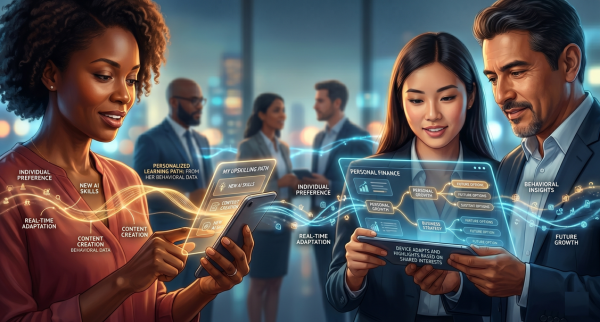
We're seeing a growing shift toward businesses that focus less on broadcasting and more on relevance. Instead of asking, "How do we reach more people?" they're asking, "How do we create a better experience for the people already paying attention?"
That subtle difference is becoming a competitive advantage.
The goal isn't to automate relationships. The goal is to make communication more meaningful.
As customer expectations continue to evolve, personalization is no longer becoming a marketing advantage. It's becoming the standard.
The businesses that thrive over the next few years won't necessarily be the loudest. They'll be the ones that understand their customers the best and communicate in ways that feel relevant, timely, and helpful.
That's where marketing is heading.
And honestly, it's a better experience for everyone.
Create More Relevant Customer Experiences
Customers don't expect perfection. They expect relevance.
Where EARPware Fits In
This shift is exactly why businesses are investing in solutions like SocialPowerPlay and AdCommand.
The goal isn't to create more noise.
The goal is to create more meaningful communication.
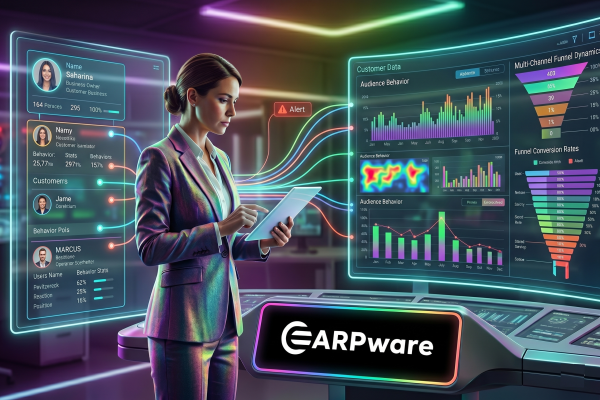
When businesses can organize audiences, automate campaigns, and deliver content based on customer behavior, marketing starts feeling less like interruption and more like service.
That's where personalization becomes powerful.
Not because it's trendy.
Because it helps businesses create better experiences.
Stop Talking To Everyone
One of the most valuable lessons businesses can learn right now is this:
You don't need to talk to everyone.
You need to connect with the right people in the right way.
The businesses winning in 2026 aren't necessarily the loudest.
They're the most relevant.
And as customer expectations continue to rise, that difference will only become more important.
Ready to create marketing that feels more personal, builds stronger relationships, and drives better results?


